Solving Pricing Discrepancies in Short-Term Rental Management Platforms
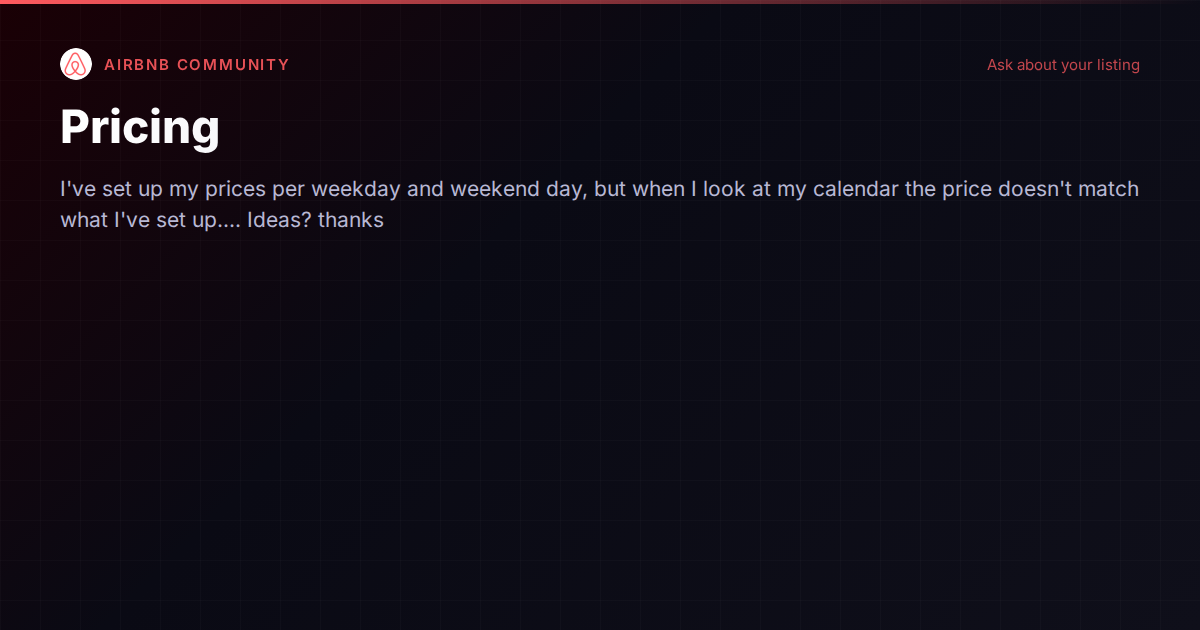
Airbnb Community
TL;DR: The author is experiencing a discrepancy between the set prices and what shows on their calendar.
Pricing discrepancies in short-term rental (STR) platforms are a common headache for hosts and property managers. Whether you’re managing a single unit or a varied portfolio, inconsistencies between your set prices and what’s displayed on various interfaces can lead to confusion, lost revenue, and guest dissatisfaction.
A recent inquiry from a host on a prominent community forum illustrates this challenge well. The host, managing multiple Airbnb listings, noticed a discrepancy between their intended weekday rate and the amount displayed on their calendar. This kind of issue prompts many to question the underlying mechanisms of their chosen STR platform.
Understanding Pricing Mechanisms
Mechanisms behind setting prices on STR platforms like Airbnb, VRBO, and others often involve several layers. Static pricing involves manually setting specific rates for different days, while dynamic pricing uses algorithms to adjust rates based on demand, competition, and market trends.
Hosts may unintentionally activate dynamic pricing tools, such as Airbnb’s ‘Smart Pricing,’ which automatically adjusts rates based on predictive analytics. While potentially beneficial for maximizing income, these tools don’t always communicate their changes clearly to the host, leading to confusion about actual listed prices versus intended rates.
Common Outsiders: Stay Requirements and Listing Connections
Another piece of the puzzle is the influence of listing settings, such as minimum stay requirements or calendar connections across multiple platforms. Hosts like the one mentioned may find their booking availability restricted due to high minimum stays or calendar sync issues, which can disrupt intended nightly pricing.
-
Minimum Stay Requirements: Setting a minimum stay of, say, 31 nights, might not only influence availability but also the visible pricing. Extended stays typically factor in discounts, presenting lower rates that align with guest expectations for long-term commitments.
-
Linked Calendars and Sync Issues: Platforms may allow you to link calendars to prevent double bookings across multiple listings, but this feature sometimes introduces data synchronization challenges. Dates may become inadvertently blocked, or pricing may not update correctly across channels if the sync process is interrupted.
Troubleshooting and Management
Here’s a straightforward approach to tackling pricing issues when they arise:
-
Double-Check Dynamic Pricing: Start by confirming whether any dynamic pricing features are active. If ‘Smart Pricing’ or equivalent tools are enabled, carefully review their recommendations and check whether these align with your business strategy.
-
Review Listing Settings: Go through your listing settings with a fine-tooth comb. Make sure your calendar sync is functioning properly and that settings concerning minimum stays or booking windows haven’t been activated without your knowledge.
-
Use a Comprehensive Property Management System (PMS): Platforms like Guesty and Hostaway offer robust integrations to manage prices across all channels seamlessly. These systems can provide centralized control over pricing and availability, reducing discrepancies.
-
Consult Support Communities: When in doubt, tap into user communities or support forums. Engaging with other hosts can often surface tips and tricks that are not immediately obvious.
Alternative Tools and Platforms
When dealing with persistent pricing issues, considering alternative PMS platforms can be beneficial. Systems like Hospitable emphasize synchronization and automated guest messaging, while Lodgify focuses on simplifying channel management and ensuring real-time price updates across syndicated listings.
For a more AI-driven solution, Vanio AI offers a comprehensive platform that integrates guest communication, pricing management, and more without relying on separate tools or middleware. By operating everything within a unified data layer, AI-natively ensures adjustments are propagated instantaneously across all interfaces and listings.
Conclusion
Pricing discrepancies in STR platforms can be frustrating but are generally resolvable with careful examination and management strategies. Understanding the full scope of your platform’s settings and embracing more harmonious solutions can reduce these mishaps, optimizing both income and guest satisfaction. For more specific information on how different tools stack up against each other, you can explore our comparison hub.