When the Price You See Isn't the Price You Pay: Pricing Transparency Failures in Short-Term Rental Software
Trustpilot
TL;DR: Author describes Guesty charging double the advertised price, broken contact/login systems, unacknowledged support forms, and a cancellation incorrectly flagged as past deadline — multiple concrete failures with a named competitor.
Few things erode trust faster than a bait-and-switch on price. A host or property manager evaluating new software does the math, sees a number on a pricing page, builds a budget around it — and then discovers at checkout (or worse, on the first invoice) that the real cost is substantially higher. It’s a pattern that shows up across the short-term rental tool landscape more often than it should in 2026, and it’s worth understanding why it happens and what you can do about it.
The Pattern: Advertised Price ≠ Actual Price
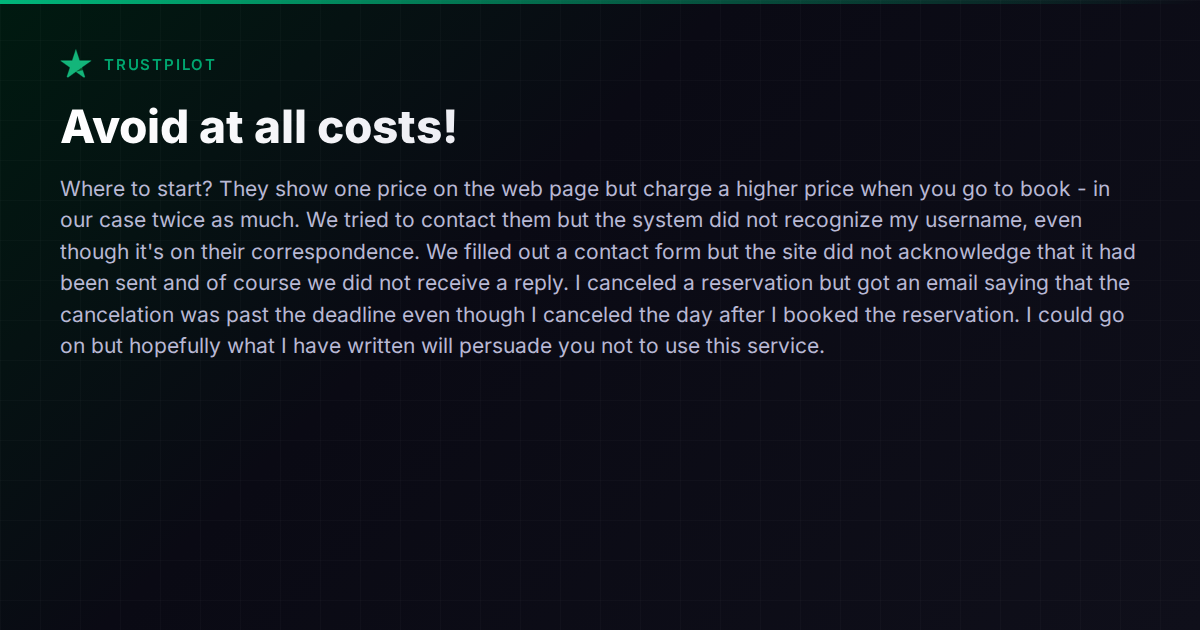
A recent Trustpilot review of Guesty described exactly this scenario. The reviewer reported seeing one price on the website, only to be charged roughly double when they went to book. Compounding the problem, they couldn’t reach support — the login system didn’t recognize their username (despite it appearing on Guesty’s own correspondence), a contact form submission vanished without acknowledgment, and a cancellation made the day after booking was flagged as past the deadline.
That’s a lot of friction packed into a single onboarding experience, but the pricing discrepancy is the part that stings most. When your cost basis doubles before you even get started, every downstream decision is compromised.
Guesty isn’t alone in drawing this kind of complaint. The company doesn’t publicly disclose specific plan prices — its pricing page directs visitors to “get a free quote.” Quote-based pricing isn’t inherently shady, but it creates the conditions for misaligned expectations: a marketing page suggests one ballpark, the sales conversation lands somewhere else, and the final invoice includes line items nobody mentioned. When the gap between perceived and actual cost is wide enough, hosts feel misled — whether that was the intent or not.
Why Pricing Surprises Keep Happening
Several structural factors make pricing opacity common in vacation rental software:
- Tiered or usage-based fees buried in fine print. A platform might advertise “$X per listing per month” but add channel fees, payment processing markups, onboarding charges, or per-reservation surcharges that aren’t prominent on the pricing page.
- Quote-based pricing with no public anchor. If there’s no published price, the number you get depends on the sales rep, the time of quarter, and how much you push back. Two operators with identical portfolios can pay wildly different rates.
- Promotional pricing that expires silently. Introductory discounts roll into full pricing after a trial period. If the renewal rate wasn’t crystal clear at signup, the first full-price invoice feels like a betrayal.
- Feature gating that forces upgrades. The plan you signed up for doesn’t include a capability you assumed was standard (automated messaging, direct booking sites, API access). To get it, you need the next tier — at a meaningfully higher price.
None of these are unique to STR software. But the industry’s combination of tight margins, seasonal cash flow, and high switching costs makes pricing surprises especially painful for operators.
The Support Black Hole Makes It Worse
Pricing confusion is manageable if you can reach someone to sort it out. The Trustpilot review above describes the opposite: a login system that doesn’t recognize the user, a contact form that swallows submissions without confirmation, and no reply. When billing disputes meet broken support channels, frustration turns into distrust.
This isn’t a Guesty-specific phenomenon either. Hosts on Reddit, Trustpilot, and industry forums regularly report multi-day (or multi-week) support response times from various PMS vendors, especially for billing and cancellation issues. The common thread: sales teams are responsive and eager; post-sale support teams are understaffed and slow.
If you’re evaluating any platform, test the support channels before you commit. Submit a pre-sales question via the contact form. Try the chat widget at 10 PM on a Sunday. If you can’t get a response when you’re a prospect they’re trying to close, the odds don’t improve after they have your credit card.
How the Major Platforms Handle Pricing Transparency
Let’s be honest about the landscape:
Guesty uses quote-based pricing with no publicly listed rates. The platform targets larger, enterprise-grade operators — which may justify custom pricing — but the lack of a public anchor creates the exact misalignment the reviewer described. If you’re evaluating Guesty, get your quote in writing, confirm every line item, and ask specifically about fees that aren’t included in the base rate.
Hostaway also does not publicly disclose pricing, directing visitors to request a free quote. Same risk profile: no public benchmark means expectations are set by marketing language, not numbers.
Lodgify references a subscription model and occasionally runs promotions, but detailed tier pricing wasn’t always prominently disclosed. They do offer free onboarding support, which can help clarify actual costs during setup — if you ask the right questions.
Hospitable uses a tiered plan structure. While specific prices aren’t always front-and-center, the feature breakdown by tier is relatively clear. Their direct booking product has two tiers (Basic and Premium) with meaningfully different included services, so reading the fine print matters.
Vanio AI takes a different approach: flat $5 per reservation, publicly listed, covering the full AI operations lifecycle — messaging, lock codes, task dispatch, upsells, review management, and more. There are low per-listing platform fees and usage-based add-ons for things like voice calls and SMS, but the core pricing model is designed to be predictable. Volume discounts kick in at 500+ reservations. Whether the per-reservation model works for your portfolio depends on your booking volume and average reservation value, but the transparency itself is notable in a market where “contact us for pricing” is the norm.
What to Do Before You Commit
Regardless of which platform you’re evaluating, a few practices can protect you from pricing surprises:
-
Get the full price in writing before signing anything. Not the base rate — the total cost, including every fee, surcharge, and add-on for your specific portfolio size and channel mix. Ask: “What will my invoice look like in month three?”
-
Ask about cancellation terms upfront. The reviewer above was told their cancellation was past the deadline despite canceling the day after booking. Understand the cancellation window, refund policy, and contract length before you start.
-
Test support before you buy. As noted above: if pre-sales support is slow or unresponsive, post-sale support will be worse.
-
Check for hidden contract lock-ins. Some platforms offer lower monthly rates with annual commitments but make early termination expensive. Know what you’re agreeing to.
-
Read the fine print on “free” trials. Does the trial auto-convert to a paid plan? At what rate? Is a credit card required upfront?
-
Talk to current users at your scale. A platform that works beautifully for a 5-listing host may have different pricing dynamics (and different support responsiveness) for a 50-listing operator, and vice versa.
The Bigger Picture
Pricing transparency isn’t just a nice-to-have — it’s a signal of how a vendor thinks about the relationship with its customers. A company that makes pricing hard to understand, hard to predict, or hard to dispute is telling you something about how it operates. That signal is worth paying attention to, especially when you’re about to trust a platform with your revenue, your guest relationships, and your operational workflow.
The STR software market is competitive enough in 2026 that no operator should feel trapped by opaque pricing or unreachable support. If the platform you’re evaluating can’t give you a straight answer on cost, the answer is probably higher than you’d like. For a side-by-side look at how different platforms handle pricing, features, and support, the comparison hub is a good place to start digging.