When Your PMS Changes the Contract Without Asking: Lessons from Unilateral Terms Modifications
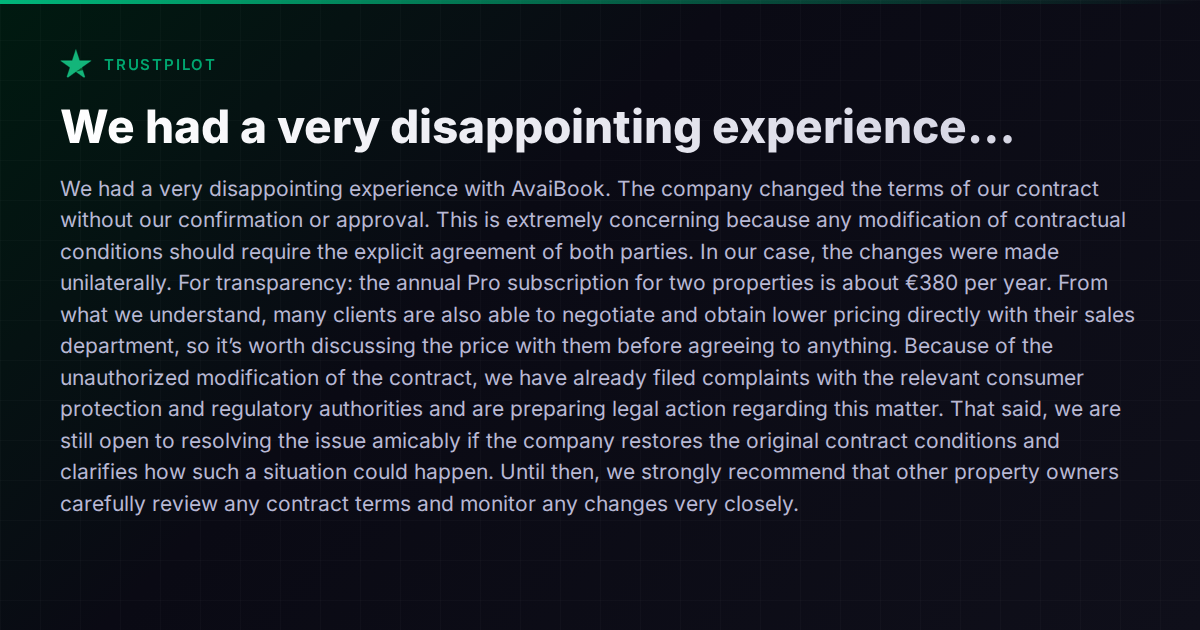
Trustpilot
TL;DR: Host managing 2 properties on AvaiBook (Guesty) had contract terms changed unilaterally without consent, is filing legal complaints and warns others to monitor their contracts closely.
A property manager running two listings recently discovered that their PMS provider had modified the terms of their subscription contract — without notice, without consent, and without any mechanism for the host to approve or reject the changes. The host is now filing complaints with consumer protection authorities and preparing legal action.
This isn’t an isolated incident. Across Trustpilot reviews, Reddit threads, and host forums, you’ll find a recurring pattern: property management software companies quietly updating pricing structures, feature access, or contractual obligations, and hosts only discovering the changes when something breaks or a bill looks wrong.
The question isn’t whether it will happen to you. It’s whether you’ll catch it when it does.
The Pattern: How Unilateral Contract Changes Happen
Most PMS platforms include language in their terms of service that grants them the right to modify pricing, features, or policies with some form of notice — often just a banner in the dashboard or a buried email. The legal threshold for “notice” is remarkably low in many jurisdictions, and companies exploit this gap.
The most common forms of unilateral changes include:
- Price increases applied mid-contract or at renewal without explicit opt-in
- Feature removal or downgrade from existing plan tiers, effectively changing what you’re paying for
- New fees (transaction charges, per-booking surcharges, integration fees) added to previously flat-rate plans
- Terms of service revisions that alter cancellation policies, data ownership clauses, or liability limits
In the case that prompted this article, the host was paying approximately €380 per year for an annual Pro subscription covering two properties on AvaiBook, a brand that operates under the Guesty umbrella. The host reports that contract terms were changed without their confirmation or approval — a move they describe as a unilateral modification that should have required explicit agreement from both parties.
Why This Problem Is Structural, Not Incidental
This isn’t about one bad actor. It’s a structural issue in how PMS companies monetize their customer base.
Many platforms — Guesty, Hostaway, Lodgify, and others — use quote-based or opaque pricing models. When pricing isn’t publicly listed, there’s more room for adjustments that existing customers don’t see coming. The host in this case also noted that “many clients are able to negotiate and obtain lower pricing directly with their sales department,” which implies different customers pay different rates for similar functionality. That kind of pricing opacity creates fertile ground for unannounced changes.
Platforms that do publish their pricing aren’t immune either. A published price page can change at any time, and if your contract references “current pricing as listed on our website,” you’ve essentially agreed to a moving target.
What the Law Actually Says
The legal picture varies by jurisdiction, but the host’s instinct to file with consumer protection authorities is well-grounded. In the EU, where this particular host appears to be based:
- The Unfair Contract Terms Directive (93/13/EEC) can void clauses that allow a seller to unilaterally alter contract terms without a valid reason specified in the contract.
- The Consumer Rights Directive (2011/83/EU) requires clear disclosure of pricing and terms before the consumer commits.
- National consumer protection bodies in most EU member states can investigate complaints about unilateral modifications, especially for B2C contracts.
In the US, the analysis is different but related. Many states have consumer protection statutes (“little FTC acts”) that prohibit deceptive trade practices, which can include material changes to agreed-upon terms without adequate notice.
The practical challenge is enforcement. Filing a complaint is straightforward. Getting a resolution — especially from a company headquartered in a different country — takes time, energy, and sometimes legal counsel that costs more than the subscription itself.
How to Protect Yourself
Whether you’re choosing a new PMS or auditing your current one, here’s what experienced operators do:
1. Read the Modification Clause Before You Sign
Look for language like “we reserve the right to modify these terms at any time” or “continued use constitutes acceptance of updated terms.” These clauses are nearly universal, but some are more aggressive than others. The best contracts require explicit notice (email, not just a dashboard banner) and give you a window to cancel without penalty if you don’t agree.
2. Screenshot or Archive Your Contract
On the day you sign up, save a PDF of the terms of service, the pricing page, and any email confirmations. If the company later claims the terms always said X, you have a dated record that says otherwise.
3. Prefer Platforms with Transparent, Published Pricing
Opaque pricing correlates with opaque changes. Platforms that publish their rates — Hospitable, Lodgify, and Vanio AI, for example — make it harder to quietly shift the goalposts, because existing customers can see the same pricing that prospects see. Vanio AI’s $5-per-reservation model is particularly easy to audit: the unit cost is public, usage-based, and doesn’t require a sales call to discover.
4. Set Calendar Reminders Before Renewal Dates
Many contracts auto-renew, and the modification often lands just before renewal. Set a reminder 60 days before your renewal date to review your current terms and compare them against what you originally agreed to.
5. Monitor Your Invoices Monthly
Don’t just check the total. Check the line items. New fees, changed rates, and reclassified charges often appear first on invoices before they’re formally announced.
How the Major Platforms Handle This
To be fair, let’s look at how some of the major PMS platforms approach pricing and contract transparency:
- Guesty does not publicly disclose pricing. Contracts are custom and quote-based. AvaiBook, their European product, operates under similar opacity. This makes it harder for customers to benchmark or detect changes.
- Hostaway also uses quote-based pricing with no public rates. Their pricing page directs visitors to request a free quote, which means your contract is unique to you — and so are any modifications.
- Lodgify offers published subscription tiers with publicly visible pricing, which provides more baseline transparency, though terms of service still allow for changes.
- Hospitable uses tiered plans with feature differentiation. Pricing structure is published, though specific rates may vary.
- Vanio AI publishes flat per-reservation pricing ($5/reservation with volume discounts) with no per-seat fees. The usage-based model is straightforward to audit since you can multiply reservations by rate and verify the invoice.
No platform is immune from changing its terms. But transparent, publicly documented pricing creates a natural accountability mechanism that opaque, negotiated contracts lack.
The Bigger Picture
The PMS market in 2026 is consolidating. Companies acquire smaller brands (as Guesty acquired AvaiBook), integrate them into larger platforms, and migrate existing customers onto new terms. This is when unilateral modifications are most likely to occur — during transitions, rebrands, and platform merges.
If you’re on a platform that was recently acquired or is undergoing significant changes, treat it as a trigger to re-read your contract, document your current terms, and understand your exit options.
Summary
Unilateral contract changes are a real and recurring problem in the PMS space. The operators who avoid getting burned are the ones who treat their vendor relationship with the same diligence they’d apply to a lease agreement: read the terms, archive the originals, monitor invoices, and know your rights under local consumer protection law.
For a broader comparison of how different platforms handle pricing, contracts, and transparency, the comparison hub covers the major players side by side.