When Your PMS Double-Charges You and Won't Refund: A Growing Problem in Rental Tech
Trustpilot
TL;DR: Host was double-charged by Guesty and never received a refund, expressing extreme dissatisfaction with their billing practices.
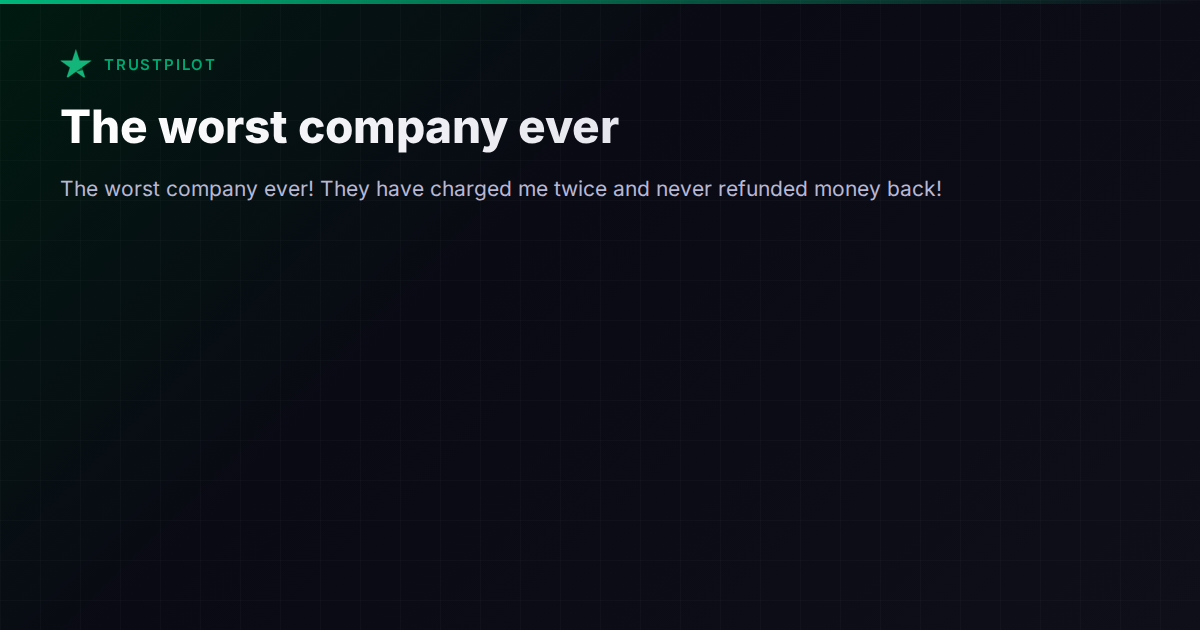
A host recently posted a one-star Trustpilot review about Guesty, reporting they were charged twice and never received a refund. The review was brief — “The worst company ever! They have charged me twice and never refunded money back!” — but the frustration behind it is anything but trivial. Billing disputes with property management software providers are one of the most corrosive experiences an STR operator can face, and they’re more common than they should be in 2026.
Let’s dig into why this keeps happening, what the landscape looks like, and what operators can do to protect themselves.
Why Billing Disputes Hit Harder in PMS Land
Short-term rental operators already run on thin margins. Between OTA commissions (15–20%), cleaning costs, maintenance, supplies, and the ever-growing list of local taxes and compliance fees, there isn’t a lot of slack in the P&L. When your software vendor double-charges you — and then doesn’t fix it quickly — the downstream effects are real. That money might have been earmarked for a cleaner’s payroll or a damage deposit hold.
The problem compounds because most PMS contracts auto-bill monthly via stored card or ACH, meaning the vendor controls the cadence of charges. If their billing system hiccups, you don’t get asked permission — the money just leaves your account. And getting it back often means navigating a support ticket queue that was built for feature requests, not financial emergencies.
This Isn’t a One-Off
Browse any host community forum — Reddit, BiggerPockets, Facebook groups for Airbnb hosts — and you’ll find a steady stream of complaints about PMS billing issues. The specifics vary:
- Double charges on subscription renewals, especially around plan changes or annual-to-monthly switches.
- Charges continuing after cancellation, sometimes for months, because the cancellation process involves emailing a specific team rather than clicking a button.
- Opaque pricing tiers that make it hard to verify whether a charge is legitimate in the first place.
- Slow refund timelines — operators report waiting 30, 60, even 90+ days for acknowledged billing errors to be corrected.
The Guesty review that prompted this article is a particularly stark example: the host says they were charged twice and never received the money back. Period. No partial resolution, no timeline, no acknowledgment.
How the Major Platforms Handle Billing
To be fair, billing errors can happen with any software vendor. The real differentiator is how quickly and transparently a company resolves them. Let’s look at the landscape.
Guesty
Guesty does not publicly disclose its pricing on its website — prospective customers must request a custom quote. This opacity can make it harder for operators to verify whether a given charge is correct. When you don’t have a clear, published rate card to point to, disputing an unexpected charge becomes a he-said-she-said exercise. Guesty targets enterprise and professional property managers, so the assumption may be that these operators have accounting teams to catch discrepancies. Smaller operators managing 5–20 listings often don’t.
Hostaway
Hostaway similarly uses quote-based pricing with no publicly listed rates. This means the same verification challenges apply. Hostaway does provide owner statements and reporting dashboards, which can help operators audit their own financial activity — but the billing relationship between Hostaway and the operator is still governed by custom agreements that aren’t always easy to parse.
Hospitable
Hospitable structures its pricing in tiered plans, though exact prices aren’t always disclosed publicly. Having defined plan tiers at least gives operators a reference point: if you know you’re on Plan X at $Y/month, a charge of $2Y is obviously wrong. That clarity, while basic, matters when you’re filing a dispute.
Lodgify
Lodgify uses a subscription model and has historically been more transparent about listing plan names and promotional pricing on its website. The presence of clear plan structures generally makes it easier for operators to catch billing anomalies early.
Vanio AI
Vanio AI takes a different approach: $5 per reservation, with publicly listed pricing and volume discounts at higher tiers. The per-reservation model means charges are directly tied to actual bookings rather than a flat monthly fee, making it straightforward to audit — you can count your reservations and multiply. That transparency doesn’t eliminate the possibility of billing errors, but it does make them easier to spot and dispute. Vanio AI also offers a 14-day free trial with no credit card required, which means you aren’t handing over payment details before you’ve tested the product.
What Operators Can Do to Protect Themselves
Regardless of which platform you use, a few practices can save you significant pain:
1. Use a dedicated business card or account for PMS billing. This makes it trivial to audit charges monthly and limits exposure if something goes wrong.
2. Set calendar reminders for billing dates. Check your bank statement within 48 hours of each expected charge. Catching a duplicate early gives you more leverage — most card issuers have chargeback windows measured in days, not months.
3. Screenshot your plan and pricing at signup. If the vendor doesn’t publish pricing publicly, keep your own records of what was agreed. Email confirmations, proposal PDFs, and chat transcripts are your receipts.
4. Know your chargeback rights. If a vendor double-charges you and doesn’t resolve it within a reasonable window (7–14 business days is fair), you’re generally within your rights to initiate a chargeback through your bank or card issuer. The vendor may not like it, but it’s a legitimate consumer protection mechanism.
5. Read the cancellation terms before you sign up. Some platforms require written notice 30–60 days before a renewal date. Missing that window can lock you into another billing cycle even if you’ve already migrated to a new tool.
The Bigger Issue: Pricing Transparency as a Trust Signal
The most important takeaway here isn’t about one double charge at one company. It’s about what pricing transparency signals about a vendor’s relationship with its customers.
When a PMS vendor won’t publish pricing, they’re betting that the sales conversation will anchor the customer before they can compare. When billing errors happen in that environment, the power asymmetry tilts further toward the vendor — the customer doesn’t always have clear documentation of what they should be paying, and the dispute process is often routed through the same sales team that signed them up.
Vendors that publish clear, auditable pricing — whether that’s a flat monthly rate, a per-listing fee, or a per-reservation model — are making a structural commitment to transparency. It doesn’t guarantee perfect billing, but it does make errors easier to identify, easier to prove, and easier to resolve.
Where to Go from Here
If you’re evaluating PMS platforms and billing transparency matters to you (it should), spend time comparing not just feature lists but pricing structures, cancellation policies, and refund timelines. Our comparison hub covers how the major platforms stack up across these dimensions.
And if you’ve been double-charged by any vendor: document everything, file a support ticket immediately, and don’t wait more than two weeks before escalating to your bank. Your operating capital is too important to leave in someone else’s dispute queue.