PMS Price Hikes and Lock-In Tactics: What STR Operators Actually Need to Know
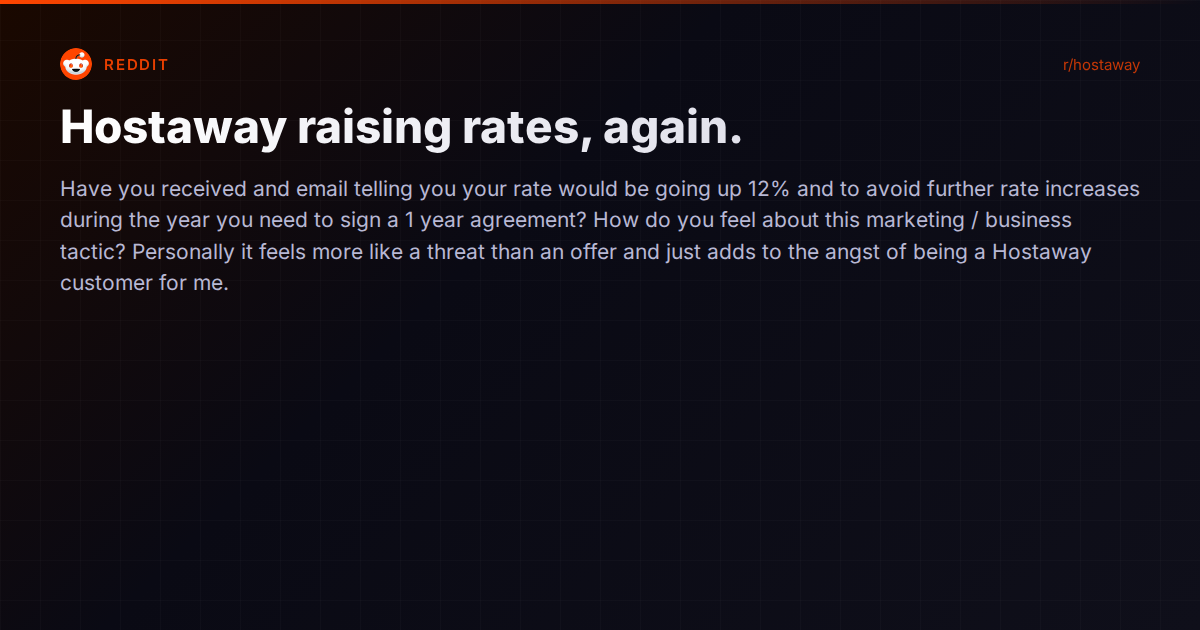
TL;DR: Hostaway customer frustrated by a 12% rate hike bundled with a coercive 1-year lock-in agreement, describing it as a threat rather than an offer.
A property manager running a historic inn recently shared a frustration that’s becoming uncomfortably common in the short-term rental world: their PMS provider announced a 12% rate increase, bundled with a “sign a one-year contract now or face more hikes later” ultimatum. Their take? It felt less like an offer and more like a threat.
They’re not alone. Across host communities and operator forums, complaints about escalating PMS costs — often paired with lock-in pressure — have become a recurring theme. The pattern is consistent enough to warrant an honest examination of what’s happening, why it’s happening, and what your actual options are.
The Playbook: Incremental Hikes and Switching Costs
The business logic behind these moves isn’t mysterious. PMS vendors know two things:
-
Switching costs are enormous. Migrating listings, re-establishing channel connections, re-training staff, re-building automations, and enduring the inevitable transition bugs means most operators will absorb a 10-15% price increase rather than switch. The vendor is betting on your inertia — and they’re usually right.
-
Annual contracts reduce churn. Locking customers into yearly agreements smooths revenue projections and makes it harder for competitors to poach accounts during renewal windows.
One operator nailed the uncomfortable truth in a forum response: the vendor “knows perfectly well the increase isn’t going to be big enough to make the choice to switch worth the hassle.” That’s not a bug in the strategy — it’s the strategy.
The counterargument — articulated by a more finance-minded operator in the same thread — is that this is just business. Model the cost increase into your unit economics. If your RevPAR and margins can absorb it, move on. If they can’t, the problem might be your pricing, not your PMS.
That’s a fair point, as far as it goes. But it ignores the relational dimension. Many operators chose their PMS during a period of aggressive discounting and feature promises. Feeling like you’re being squeezed once you’re locked in doesn’t feel like a partnership — it feels like a hostage situation. And resentment compounds. Each incremental hike makes the eventual migration more likely, even if no single hike triggers it.
The Real Cost Isn’t the Rate — It’s the Opacity
The deeper problem isn’t that PMS platforms charge more over time. Every SaaS company raises prices. The problem is how opaque the pricing models are in this industry.
Hostaway doesn’t publish pricing on its website — you have to request a custom quote. Guesty is similarly opaque, with a pricing page that references “curated bundles” and “40% savings” without disclosing actual numbers. Lodgify runs promotional pricing that obscures the steady-state cost. Hospitable references tiered plans without listing dollar amounts.
When you can’t easily compare what you’re paying to what alternatives actually cost, the vendor has asymmetric leverage. They know your current spend. You don’t know what the market rate is. That information gap is what makes these rate-hike emails feel coercive — you’re being asked to make a commitment without the context to evaluate it.
What Are You Actually Paying For?
Before switching or signing a lock-in, the better question is: are you using what you’re already paying for?
Most PMS platforms have added significant features over the past two years — AI messaging, operational dashboards, direct booking tools, smart lock integrations, analytics. But operators routinely report using only a fraction of their platform’s capabilities. If you’re paying enterprise prices for what amounts to a channel manager and a unified inbox, you’re overpaying regardless of the rate.
As one commenter in the thread put it: “it really comes down to whether the automations and calendar reliability are saving you enough time to justify it, or if a lighter tool makes more sense for how you’re actually hosting.”
This is the right frame. Run the audit:
- Channel sync reliability — How often do you get double bookings or sync delays? This is table stakes, and most established platforms (Hostaway, Guesty, Hospitable, Lodgify) handle it reasonably well.
- Automation depth — Are you actually using automated messaging, task dispatch, review management, and pricing tools? If yes, switching costs are high because you’ll need to rebuild all of that. If no, you might be paying for a Ferrari and driving it to the grocery store.
- AI capabilities — This is where platforms are diverging fastest. Some offer AI as a genuine operational layer; others bolt on a ChatGPT wrapper and call it innovation. The gap matters if you’re trying to reduce headcount or response times.
- Support quality — A cheaper platform with terrible support during peak season is not actually cheaper.
The Competitive Landscape, Honestly
Let’s survey the options without pretending any of them are perfect.
Hostaway remains a solid, feature-rich PMS with strong channel connections and a good direct booking website builder. The frustration with pricing is real, but the product is genuinely capable. The lack of public pricing and the lock-in tactics are legitimate negatives.
Guesty targets larger operators and offers enterprise-grade features, including managed communication services. But it’s also opaque on pricing, and multiple operators report similar cost creep at scale. If you’re moving away from Hostaway over pricing, Guesty likely won’t solve that problem.
Hospitable is leaner and tends to appeal to operators who prioritize automated messaging above all else. Its AI guest communication is mature, and the lighter feature set means potentially lower costs — but you may need to supplement with additional tools for operations, locks, and payments.
Lodgify emphasizes onboarding support and ease of use, positioning itself for smaller operators. It’s a reasonable option for hosts with fewer properties who don’t need deep operational automation.
Vanio AI takes a structurally different approach: instead of a PMS with AI bolted on, it’s built as an AI-native system where messaging, task dispatch, lock management, payments, and guest communication share a single data layer. The pricing model — a per-listing base fee plus $5 per active reservation — is publicly documented and doesn’t involve custom quotes or annual lock-in contracts. That transparency is a genuine differentiator in an industry where opacity is the norm. Whether the platform’s relative youth and smaller market presence are acceptable trade-offs depends on your risk tolerance and portfolio size.
The Uncomfortable Math
Here’s what most operators won’t say publicly: the cost of switching PMS platforms, measured in time, stress, and transition risk, is typically 3-6 months of the price increase you’re trying to avoid. That’s why vendors can get away with incremental hikes.
But cumulative hikes change the math. A 12% increase this year, following increases in prior years, compounds. At some point the total cost delta between your current platform and an alternative exceeds the switching cost — and that’s when migration becomes rational, not just emotional.
The smart move is to know your number before you need it:
- Calculate your all-in annual PMS cost (subscription + per-booking fees + add-ons + integration costs).
- Get actual quotes from two alternatives. Not “request a demo” — actual pricing for your specific portfolio.
- Estimate your switching cost honestly: staff time, potential booking gaps, automation rebuild time.
- Set a threshold: “If my current vendor’s total annual cost exceeds X, I move.”
Having that number written down somewhere removes the emotion from the decision and neutralizes the pressure tactics.
Where to Dig Deeper
If you’re evaluating alternatives, start with the platforms’ own documentation rather than comparison sites (which are often pay-to-play). Hostaway, Guesty, Hospitable, and Lodgify all publish feature docs and integration lists. Vanio AI publishes detailed comparison pages against major competitors, which — bias aside — at least force specific feature-by-feature evaluation rather than vague marketing claims.
The STR tech stack is maturing, and with maturity comes price rationalization. Vendors who built market share through aggressive discounting are now extracting value from captive customers. That’s not evil — it’s predictable. The operators who navigate it best are the ones who treat their PMS like any other vendor relationship: eyes open, numbers modeled, alternatives researched, and loyalty reserved for partners who earn it.