When Your PMS Onboarding Never Actually Happens
Trustpilot
TL;DR: Author signed up for Smoobu but couldn't complete setup due to outdated tutorials and no-show onboarding calls, and is still frustrated 7 months later.
You sign up for a property management platform. You watch the tutorials. Something doesn’t match the interface you’re seeing — buttons moved, menus renamed, workflows reorganized. You schedule a call with the support team. They don’t show up. You try again. No available slots for weeks.
Seven months later, you still haven’t finished setting up.
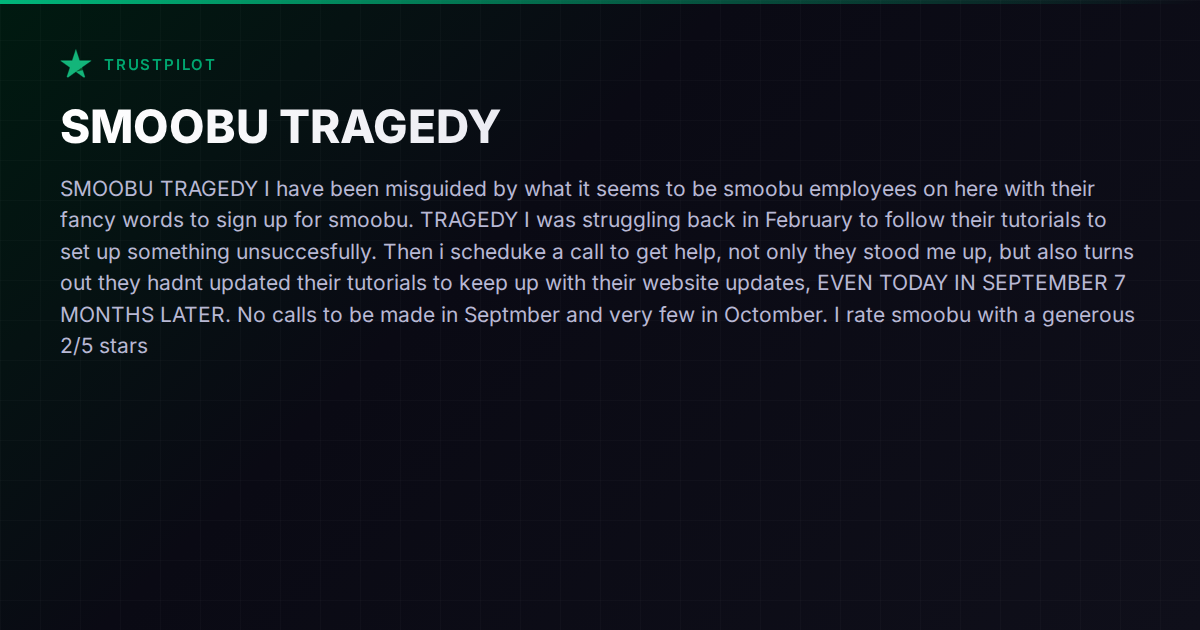
This isn’t a hypothetical. One host recently described exactly this experience with Smoobu on Trustpilot, calling it a “tragedy.” They signed up in February, struggled through outdated tutorials that hadn’t been updated to match the current interface, scheduled an onboarding call that never happened, and by September were still stuck — with limited call availability going forward. A generous two-star review.
It’s a pattern that shows up across multiple platforms, not just Smoobu. And it points to one of the most underappreciated risks in choosing a PMS: the gap between buying and actually being operational.
The Onboarding Gap Is Everywhere
Most PMS marketing pages focus on features. Channel sync. Automated messaging. Dynamic pricing. Smart lock integrations. The assumption is that you’ll get past setup and into daily use. But for many operators — especially solo hosts or small teams without a technical background — setup is where the whole thing stalls.
The onboarding gap has a few recurring symptoms:
- Outdated documentation. The product ships updates faster than the help center can keep up. Screenshots don’t match the live UI. Steps reference settings that have moved or been renamed. This is surprisingly common across the industry.
- No-show or unavailable support. Some platforms offer onboarding calls, but availability is limited, slots fill up fast, or in the worst cases, the call simply never happens.
- Self-serve tutorials that assume too much. Walkthroughs written by developers or power users often skip steps that seem obvious to them but aren’t to someone connecting their first Airbnb API integration.
- No escalation path. When the tutorial fails and support isn’t reachable, there’s nowhere to go. You’re stuck in a limbo between “signed up” and “actually running.”
This isn’t unique to smaller platforms. Operators report similar experiences across the PMS landscape — stalled setups, mismatched docs, and support queues that stretch for days.
How Different Platforms Handle Onboarding
Let’s look at how some of the major players approach this, honestly.
Lodgify has made onboarding a marketing differentiator. They offer free one-on-one onboarding sessions, which they value at $700, included with every subscription. If you’re a less technical host who needs someone to walk you through the setup live, this is a legitimate advantage. The question is always whether the quality of those sessions holds up at scale, but the commitment to live onboarding is real.
Guesty targets professional property managers and larger portfolios. Their onboarding is typically more structured, with dedicated account managers for larger accounts. But their pricing isn’t publicly disclosed, which means smaller operators may find themselves on a lower-priority support tier without realizing it until they need help. The experience varies significantly based on account size.
Hostaway also uses quote-based pricing and a more consultative sales process. Operators with larger portfolios tend to report smoother onboarding because they get more attention. Smaller operators sometimes describe a different experience — longer waits, less hand-holding.
Hospitable leans toward automation-first setup, with enough guides and templates that many hosts can self-serve. Their approach works well for operators who are comfortable with software and just need the system to do what it says. For hosts who hit a wall, though, the support options become the bottleneck.
Smoobu positions itself as a more affordable option for smaller operators, which is part of its appeal. But as the Trustpilot review illustrates, affordability doesn’t help if you can’t get past setup. Outdated tutorials combined with limited call availability creates a particularly frustrating experience for the exact audience — smaller, less technical hosts — that the pricing is designed to attract.
The Real Cost of a Stalled Setup
The financial math here is rarely discussed but always matters. When a host signs up for a PMS and can’t get operational:
- They’re paying subscription fees while getting zero value. Most PMS platforms charge monthly, starting from signup — not from first booking managed.
- Their listings remain manually managed. Which means they’re doing the same work they were doing before, plus troubleshooting a half-configured system.
- They lose the window of motivation. Onboarding a PMS takes energy and focus. If you stall for a month, the odds of coming back and finishing drop dramatically. Seven months later? You’re either locked into sunk cost or looking for something else entirely.
For professional property managers with larger portfolios, a stalled onboarding is a business emergency — you might be paying significant monthly fees while your team is stuck. For solo hosts, it’s more insidious: the fee is low enough to forget about, and the frustration just quietly accumulates.
What to Look for Before You Commit
If you’re evaluating PMS platforms, here are a few things worth checking before you sign up:
- Try the setup before paying. A free trial that lets you actually attempt the onboarding — not just browse a demo dashboard — reveals more than any feature list. If the tutorials are outdated or confusing during the trial, they won’t improve after you pay.
- Ask about live onboarding availability. Not “do you offer onboarding calls” but “how soon can I get one, and what happens if I need a second session?” The difference between a 48-hour wait and a 3-week wait is enormous.
- Check the help docs against the live product. Open the docs and the product side by side. If the screenshots don’t match the interface, that’s a signal about how the company prioritizes documentation — which is a proxy for how they prioritize your experience after the sale.
- Look at the community. Forums, Reddit threads, Trustpilot reviews — specifically search for terms like “setup,” “onboarding,” “stuck,” and “support.” Feature complaints are normal. Setup complaints are a red flag.
- Understand the billing structure. Does billing start at signup or first booking? Is there a money-back window? Can you pause if onboarding stalls?
Vanio AI takes a different structural approach to this problem. Because it’s a per-reservation pricing model ($5 per reservation rather than a monthly subscription), you’re not paying while you’re setting up and not yet managing bookings. The 14-day free trial is designed around actually getting connected and operational, not just browsing features. It doesn’t eliminate the onboarding challenge entirely — every platform has a learning curve — but the financial pressure of paying-while-stuck is removed from the equation.
The Bottom Line
Onboarding failures are one of the most common reasons hosts abandon a PMS, and they’re almost never discussed during the sales process. The experience described in that Smoobu review — outdated tutorials, missed calls, months of frustration — isn’t an anomaly. It’s a structural risk that exists across the industry.
The platforms that handle it best aren’t necessarily the ones with the most features. They’re the ones that treat getting you operational as the first product experience, not an afterthought.
If you’re comparing PMS options, our comparison hub covers the major platforms side by side. Start there before you sign anything.